

to know, have a flavor
saber
PreteriteélTap to show answer
supo
ConjuGato will help you to master tricky Spanish grammar with focused practice and clear explanations.



After a while, you no longer translate the words in your head, you just THINK them.

Practice the 250 most common verbs, including irregulars, in the present and preterite tenses, plus the complete noun gender and Por vs. Para quizzes – no time limits!
If you want to tackle more advanced verbs, tenses, and get additional grammar quizzes, the Pro version unlocks it all with an affordable one-time purchase.
To speak even basic Spanish, it’s necessary to conjugate verbs on the fly. ConjuGato will help you get there with a simple but efficient practice: see a verb, a tense, and a pronoun, and then try to recall the conjugated form. Forms you rate as difficult will come back more often, gradually becoming easier to recall when you need to say them.
to know, have a flavor
saber
supo
to have
tener
tienes
to look for
buscar
busqué
to sleep
dormir
durmió
to do, make
hacer
hizo
to ask for
pedir
pides
to come
venir
vine
to arrive
llegar
llegué
to fall
caer
caigo
to say
decir
dijeron
Hard · Easy
ConjuGato is not just a flashcard app – it actually teaches you by explaining every tense, verb form and quiz answer. It presents the Spanish rules in a friendly way, helping you to build understanding of grammar nuances and progress beyond the familiar basics.
I extended my hand to greet my new neighbors
Extendí _____ mano para saludar a mis nuevos vecinos
Extendí la mano para saludar a mis nuevos vecinos
La mano is feminine because Latin manus was a feminine noun
I like listening to the sound of the water
Me gusta escuchar el sonido _____ agua
Me gusta escuchar el sonido del agua
El agua is feminine despite singular el or un
The problem requires an urgent solution
_____ problema requiere una solución urgente
El problema requiere una solución urgente
Greek-derived -ma nouns are usually masculine
Mexico City is enormous and vibrant
_____ ciudad de México es enorme y vibrante
La ciudad de México es enorme y vibrante
Nouns ending in -dad are feminine
The next day everything returned to normal
_____ día siguiente, todo volvió a la normalidad
Al día siguiente, todo volvió a la normalidad
El día is a masculine exception to final -ia/-ía
/ 5 Correct!
The coffee is cold for my taste
El café está frío _____ mi gusto
El café está frío para mi gusto
Para frames viewpoints, comparisons with expectations, “enough to” judgments, and being in the mood for something
I went to get the umbrella when it started to rain
Fui _____ el paraguas cuando empezó a llover
Fui por el paraguas cuando empezó a llover
Por marks what someone goes to get, pick up, or look for; a por is also common in Spain
I found out about the news from a friend
Me enteré de la noticia _____ un amigo
Me enteré de la noticia por un amigo
Por marks a route or channel, or a vague location, area, or surface
I sold a used lamp for twenty euros
Vendí una lámpara usada _____ veinte euros
Vendí una lámpara usada por veinte euros
Por marks prices, exchanges, and swaps, including one thing standing in for another
I’m looking for a dress for when we celebrate the wedding
Busco un vestido _____ cuando celebremos la boda
Busco un vestido para cuando celebremos la boda
Para marks a deadline, target date, or planned future time
/ 5 Correct!
Last night’s party was in the garden, under paper lanterns
La fiesta de anoche _____ en el jardín, bajo unas luces de papel
La fiesta de anoche fue en el jardín, bajo unas luces de papel
Ser gives the time or location of an event
When Ximena was born, it was May 6
Cuando nació Ximena, _____ el 6 de mayo
Cuando nació Ximena, era el 6 de mayo
Ser identifies the clock time, day, or calendar date
My parents were present when the diploma was presented
Mis padres _____ presentes durante la entrega del diploma
Mis padres estuvieron presentes durante la entrega del diploma
Estar gives the location, presence, or availability of someone or something
After the race, we’re all out of breath
Tras la carrera, todos _____ sin aliento
Tras la carrera, todos estamos sin aliento
Estar presents a state or condition at a particular time
The cat’s meow was imitated by the parrot
El maullido del gato _____ imitado por el loro
El maullido del gato fue imitado por el loro
Ser + past participle presents an action done to the subject
/ 5 Correct!
It bothers me when he talks with his mouth full
Me molesta cuando él _____ con la boca llena
Me molesta cuando él habla con la boca llena
Cuando presents something as present, habitual, or completed, so the verb normally uses the indicative
I hope you sleep well tonight
Ojalá _____ bien esta noche
Ojalá descanses bien esta noche
Ojalá introduces a wish, so the verb uses the subjunctive
I’m glad your brother found a job
Me alegra que tu hermano _____ trabajo
Me alegra que tu hermano haya encontrado trabajo
Me alegra presents the situation as the cause of an emotional reaction, so the verb after que uses the subjunctive
I don’t think the food will be ready before two
No creo que la comida _____ lista antes de las dos
No creo que la comida esté lista antes de las dos
No creo does not accept the idea as true, so the verb uses the subjunctive
I think you need to rest a little before you continue studying
Creo que _____ descansar un poco antes de seguir estudiando
Creo que necesitas descansar un poco antes de seguir estudiando
Creo presents the idea as something believed to be true, so the verb uses the indicative
/ 5 Correct!
ConjuGato does not force a specific lesson program on you. It is built to work with other materials, so you can get it in sync with what you’re learning in your class or workbook, and add more when you’re ready.
Go at your own pace, focusing on a small set of verbs, one troublesome tense, or specific grammar quizzes. At the end of each practice session, you can review the results and the history to see if anything needs more of your attention.
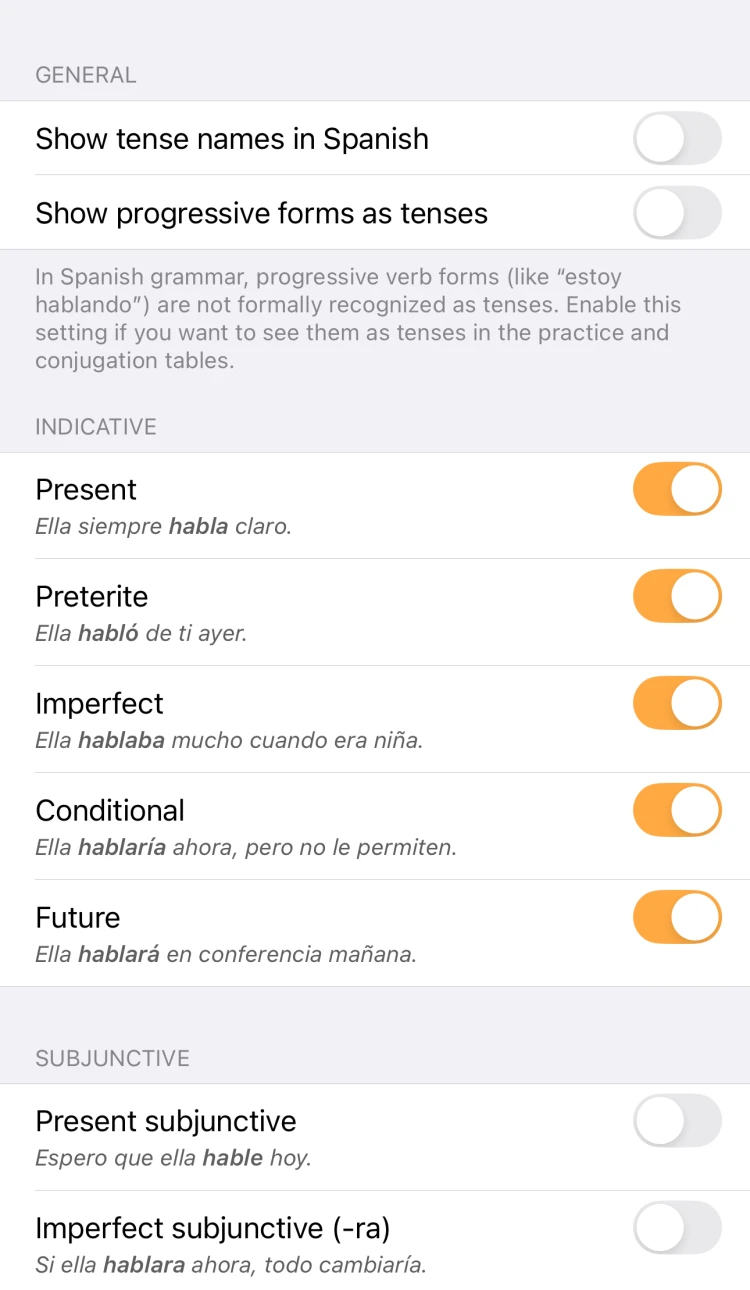
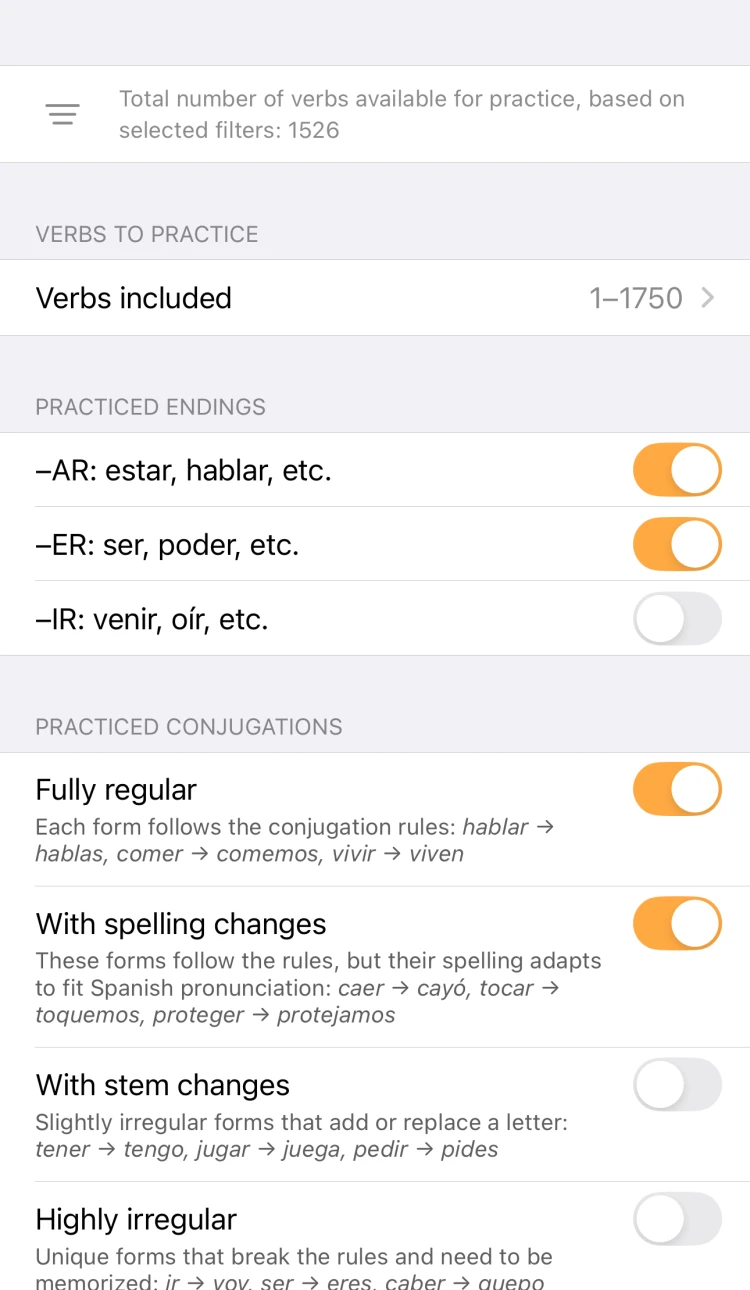
Choose Spain or Latin America to get right verb forms and pronunciation, or even practice regional Argentinian and Chilean vos forms.


We’re Iván & Irina, and we built ConjuGato after moving to Chile and struggling with Spanish ourselves. Almost a decade later, we still develop it, personally answer your emails, and turn your suggestions into improvements.
ConjuGato respects your autonomy and privacy: there’re no ads or personal information collection. You can practice the free version as much as you’d like to, while the Pro is not a subscription, but a lifetime purchase.

Give the topics that make you hesitate a few focused minutes daily, so you’re ready when it’s your turn to speak.